What website transparency means
Website transparency is more than publishing an About page. It includes clear information about who operates a site, how a service works, what data is collected, how users can contact the business, and what technical signals are publicly delivered to a browser. Source inspection can support this review by showing the document structure and public metadata behind the visible interface.
Continue exploring: Use the ViewSourcePage source analyzer to inspect a public page, then compare your findings with our guide on 10 Things You Can Learn by Viewing a Website's Source Code.
Why technical clarity matters
Users increasingly evaluate websites before they submit information, purchase something or rely on a claim. Clear navigation, accessible contact information, consistent branding and understandable privacy language can reduce uncertainty. Technical details such as HTTPS, canonical URLs, language declarations and structured data are not substitutes for trust, but they can contribute to a coherent and professional web presence.
Source code as a transparency layer
Public HTML can reveal the elements that make a page understandable to browsers and assistive technologies. A reviewer can inspect headings, labels, navigation links, alternative text, metadata and structured data. This does not expose private backend systems, but it does provide a factual view of the markup a site chooses to deliver publicly.
Trust signals worth reviewing
A useful transparency review can check whether the site identifies its organization, provides a real contact path, explains important policies and maintains consistent metadata. From source, you can also verify that the canonical URL matches the preferred address, that the language attribute is appropriate, and that social sharing metadata represents the page accurately.
Transparency and SEO
Search visibility and user trust are related but not identical. Technical SEO helps search engines understand pages, while trustworthy content helps people decide whether to engage. Source inspection can validate basic on-page signals, but it should not be described as a direct way to increase an E-E-A-T score. Instead, use it to confirm that your public implementation supports the quality and clarity of the content users see.
Privacy boundaries
A source viewer should be used with a clear understanding of the privacy boundary. Public HTML can contain references to analytics tools, advertising scripts, social widgets and third-party resources. Seeing a script reference does not automatically prove what data the service collects. For privacy work, combine source inspection with the site privacy policy, browser network tools and consent behavior.
Designing for confidence
Transparency also affects interface design. A clear header, readable content, consistent footer, visible contact route and predictable language selector reduce friction. Technical pages should avoid unexplained claims and fake statistics. If a website says it is free, it should clearly explain what free means; if it says data is not stored, that claim should match the actual implementation.
A practical transparency audit
Start with the homepage and inspect the title, description, canonical, language, headings and links. Review the About, Contact, Privacy and Terms pages. Then inspect the pages that handle forms or sensitive interactions. Look for unnecessary third-party scripts and make sure important policy pages are linked from a consistent location.
What source inspection cannot prove
HTML alone cannot prove that a company is trustworthy, that a database is secure, or that a privacy promise is technically enforced. Source code is evidence about the public document, not a complete audit of the organization. Treat it as one layer in a broader review rather than a final trust score.
Conclusion
A transparent website combines clear communication with a consistent technical foundation. Public source inspection is useful because it lets developers, SEO teams and reviewers verify visible markup and metadata without guessing. When combined with honest content, accessible policies and reliable contact information, technical clarity can make a website easier to understand and evaluate.
A practical checklist
Use this checklist when reviewing a real page so the process stays repeatable rather than relying on memory.
- Check About and Contact information
- Review Privacy and Terms pages
- Inspect public metadata
- Review third-party references
- Avoid unsupported trust claims
Frequently asked questions
Does source inspection show private backend code?
No. A browser receives only the public response needed to render or process the page. Private application logic, databases, server credentials and protected files remain on the server.
Is a source viewer a replacement for a full audit?
No. It is a focused inspection layer. Use dedicated SEO, accessibility, performance, security and analytics tools when you need deeper evidence.
Final thoughts
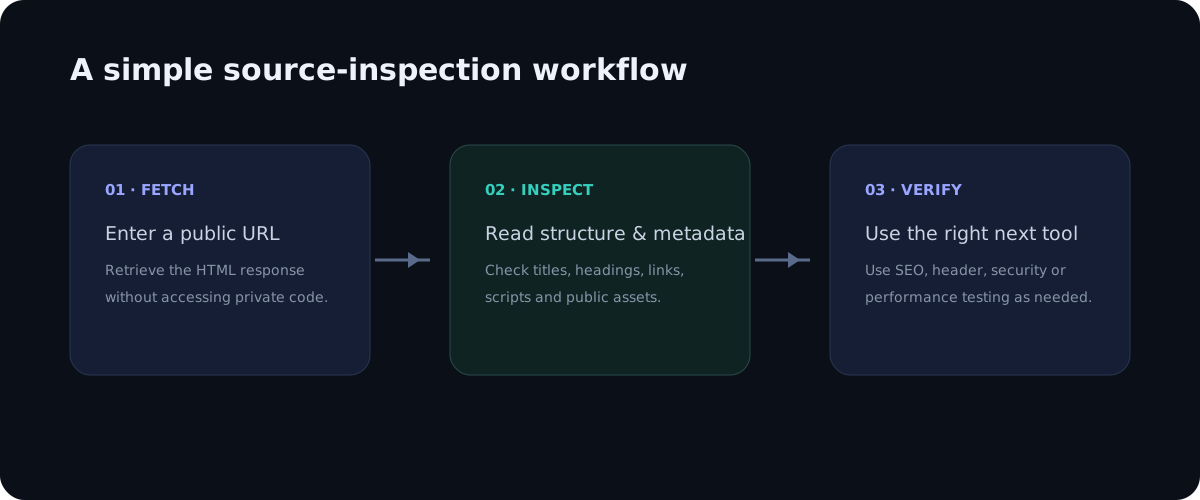
Source inspection is valuable because it turns an invisible technical layer into something you can read and reason about. The best workflow is simple: observe the public markup, identify a specific question, verify the relevant element, and then use a specialist tool when the question goes beyond HTML. This keeps technical analysis practical, evidence-based and easy to repeat across pages.
Deeper practical notes
Transparency is strongest when the information presented to users matches the implementation. If a website promises a free service, the interface should make pricing limits clear. If it promises that URLs are processed only temporarily, the operational design should support that statement. Technical source review can identify analytics and third-party scripts that deserve a closer privacy explanation, but it cannot by itself prove how long a backend retains data.
Clear ownership information is another useful trust layer. An organization page should explain what the service does and provide a legitimate contact route. This does not mean every site needs to publish a private home address or unnecessary personal details. It means users should have enough information to understand who is responsible for the service and how to raise questions or concerns.
Accessibility contributes to transparency because accessible markup makes information available to more people. Inspect headings, form labels, alternative text, landmark elements and keyboard-friendly controls. A visually polished interface can still be confusing if the underlying document is not semantic. Source inspection is a quick way to identify obvious gaps before a dedicated accessibility audit.
Performance can also influence perceived trust. Slow pages, broken assets and layout shifts make a service feel less reliable even when the business is legitimate. Source inspection can reveal a long list of scripts or stylesheets that deserve measurement. The important point is to connect technical observations with the user experience rather than treating every extra resource as automatically harmful.
For a multilingual site, transparency includes language consistency. The page language attribute, visible language selector, canonical URL and alternate language links should tell a consistent story. A user who chooses Spanish should not be sent to a German page by a broken selector. Clean language routing is both a usability feature and a technical quality signal.
Finally, avoid manufacturing trust. Fake user counts, invented reviews, unsupported security badges and exaggerated performance claims can damage credibility. A small site with honest wording is stronger than a site that tries to look established through numbers it cannot substantiate. Source inspection should support truthful communication, not replace it.
Applying the guide in a real audit
When applying this workflow to website transparency: why source visibility can build user trust, begin with one concrete question rather than trying to audit everything at once. A focused question makes source inspection faster and produces evidence that can be shared with a developer, editor or SEO specialist. Record the page URL, the element you inspected and the observation you made. This simple habit turns an informal browser check into a repeatable technical review.
It is also useful to compare more than one page template. A homepage, article, category page and utility page can have different HTML structures even when they share the same brand. Looking at several examples helps distinguish a one-off issue from a template-level problem. If the same markup appears across many pages, the best fix is usually at the template or component level rather than by editing individual pages.
Keep the difference between evidence and interpretation clear. Seeing an element in source is evidence that the public response contains that element. It is not automatically evidence that a search engine indexed it, that a browser loaded every referenced asset, or that a backend process is secure. Strong technical analysis connects source observations with the right secondary test instead of making conclusions that the HTML alone cannot support.
Another practical benefit is documentation. A source viewer with readable line numbers makes it easier to describe an issue precisely: for example, a missing canonical, an unexpected robots directive, a duplicate heading, or a third-party script reference. Clear documentation shortens the feedback loop between SEO teams, developers and content owners because everyone can discuss the same technical evidence.
Finally, treat the public source as part of the user experience. The document should be understandable, semantically organized and consistent with the visible interface. Good HTML structure supports accessibility, maintainability and search understanding at the same time. A clean source document is not a guarantee of quality, but it is a strong foundation for a website that is easier to maintain and easier for people and machines to interpret.