What Open Graph does
Open Graph metadata helps platforms understand how a webpage should be represented when its URL is shared. Common properties include og:title, og:description, og:type, og:url and og:image. These tags live in the HTML head and are easy to verify through page source.
Continue exploring: Use the ViewSourcePage source analyzer to inspect a public page, then compare your findings with our guide on Robots Meta Tags & X-Robots-Tag: What Source Inspection Reveals.
og:title
The og:title value is the title used for many social previews. It can differ from the HTML title, but keeping the two aligned around the same page topic usually creates a more consistent experience. Avoid misleading social titles that promise something the page does not deliver.
og:description
The description gives sharing platforms additional context. It should summarize the page clearly and match the actual content. A generic site description across every article wastes an opportunity to communicate why the shared page is useful.
og:image
The image is often the most visually noticeable part of a social preview. Inspect the source for a complete image URL and confirm that it points to the intended asset. Use appropriate dimensions and a readable composition, especially for article cards and link previews.
og:url and canonical
og:url identifies the URL associated with the social object, while the canonical communicates the preferred URL for search engines. They often match, but they serve different systems. Check both values when diagnosing inconsistent sharing or duplicate URL problems.
Twitter/X metadata
Some sites add twitter:card, twitter:title, twitter:description and twitter:image tags. These can provide platform-specific control. Source inspection lets you confirm whether the tags are present and whether their values match the page.
How to test source
Open a page source, search for og:, and review each property. If the values look correct, use a social preview or platform debugging tool when available to confirm how the platform actually renders the link. Source inspection verifies the markup; it does not guarantee a platform will cache it immediately.
Common problems
Typical issues include relative image URLs, missing og:image, an old image after a redesign, descriptions copied across every page, or social metadata pointing to a staging hostname. These are often simple to spot in source.
Open Graph and content quality
Social metadata cannot compensate for weak content. Its main purpose is accurate representation and a better sharing experience. Good titles and images can improve click-through from social channels, but the underlying article still needs to satisfy the user’s intent.
Conclusion
Open Graph is a small but useful part of modern page metadata. By inspecting source, you can verify the basic sharing signals quickly and catch obvious inconsistencies before promoting a page across social channels.
A practical checklist
Use this checklist when reviewing a real page so the process stays repeatable rather than relying on memory.
- Check og:title
- Check og:description
- Check og:image
- Compare og:url and canonical
- Test social previews
Frequently asked questions
Does source inspection show private backend code?
No. A browser receives only the public response needed to render or process the page. Private application logic, databases, server credentials and protected files remain on the server.
Is a source viewer a replacement for a full audit?
No. It is a focused inspection layer. Use dedicated SEO, accessibility, performance, security and analytics tools when you need deeper evidence.
Final thoughts
Source inspection is valuable because it turns an invisible technical layer into something you can read and reason about. The best workflow is simple: observe the public markup, identify a specific question, verify the relevant element, and then use a specialist tool when the question goes beyond HTML. This keeps technical analysis practical, evidence-based and easy to repeat across pages.
Deeper practical notes
Social previews can look wrong even when the page itself looks perfect. This often happens because the social platform reads metadata rather than the visual browser layout. If og:title is missing, og:image points to an outdated asset, or og:url uses a staging hostname, the preview can be inconsistent. Source inspection makes these mistakes visible before you share the link widely.
Image URLs deserve special care. Use absolute URLs that are publicly reachable, avoid accidental authentication requirements, and make sure the file is actually an image. A source tag can be syntactically correct while the destination returns an error or an unsupported format. Preview tools are useful for confirming the final result.
Article templates should generate metadata from the article itself. If every post inherits the homepage Open Graph title and description, social sharing becomes confusing. Dynamic templates should pull the correct title, summary and featured image from the article record while preserving safe escaping and valid URLs.
Open Graph does not replace search metadata. The HTML title and meta description serve a different purpose, while Open Graph primarily describes social sharing. Keep the values consistent enough to avoid confusing users, but do not assume that one set of tags automatically controls every platform.
Caching is another reason a correct source tag may not immediately produce the expected social preview. Platforms can cache metadata and images. If you have just changed an image, validate the current source first, then use the platform’s refresh or debugging mechanism where available.
For multilingual websites, social metadata should follow the selected language page. A Spanish article should not inherit an English og:title simply because the template was copied. Inspect representative pages in every supported language to catch localization gaps.
Applying the guide in a real audit
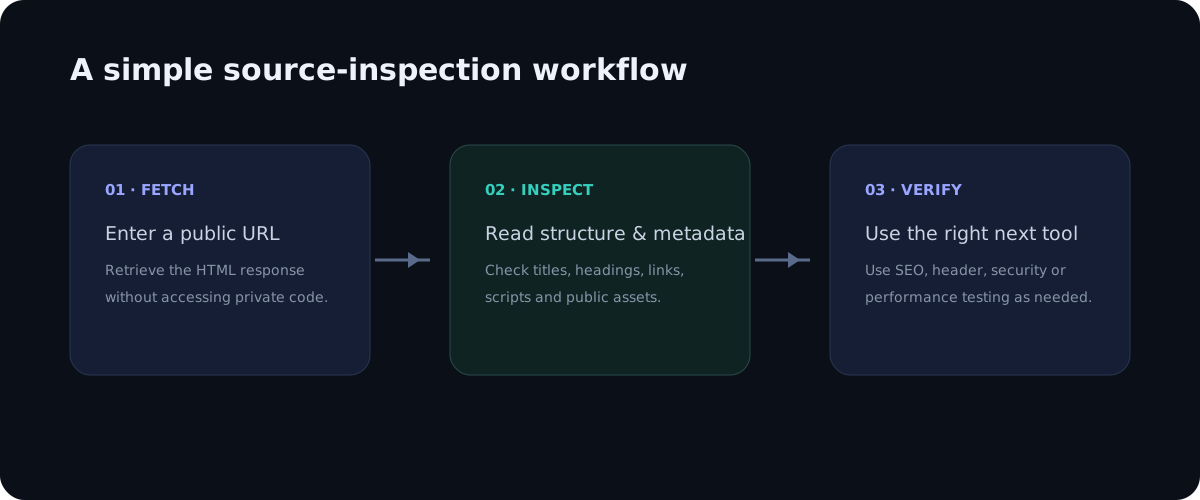
When applying this workflow to open graph tags: how to check social sharing metadata, begin with one concrete question rather than trying to audit everything at once. A focused question makes source inspection faster and produces evidence that can be shared with a developer, editor or SEO specialist. Record the page URL, the element you inspected and the observation you made. This simple habit turns an informal browser check into a repeatable technical review.
It is also useful to compare more than one page template. A homepage, article, category page and utility page can have different HTML structures even when they share the same brand. Looking at several examples helps distinguish a one-off issue from a template-level problem. If the same markup appears across many pages, the best fix is usually at the template or component level rather than by editing individual pages.
Keep the difference between evidence and interpretation clear. Seeing an element in source is evidence that the public response contains that element. It is not automatically evidence that a search engine indexed it, that a browser loaded every referenced asset, or that a backend process is secure. Strong technical analysis connects source observations with the right secondary test instead of making conclusions that the HTML alone cannot support.
Another practical benefit is documentation. A source viewer with readable line numbers makes it easier to describe an issue precisely: for example, a missing canonical, an unexpected robots directive, a duplicate heading, or a third-party script reference. Clear documentation shortens the feedback loop between SEO teams, developers and content owners because everyone can discuss the same technical evidence.
Finally, treat the public source as part of the user experience. The document should be understandable, semantically organized and consistent with the visible interface. Good HTML structure supports accessibility, maintainability and search understanding at the same time. A clean source document is not a guarantee of quality, but it is a strong foundation for a website that is easier to maintain and easier for people and machines to interpret.